Threads. Contextual Essay

For my groupโ€™s pitch, we created Threads., a fashion app which finds clothing across the internet when users scan the item, similar to how Shazam identifies music by listening to it. The app also has a suggested/recommended section which shows users clothes they might like and are in fashion.

When creating my digital artefact, I drew inspiration from tv shows โ€œA Current Affairโ€, โ€œ60 Minutesโ€ and other news shows, and produced a satirical news story. The video begins with a short introduction where I welcome the viewers to the show โ€œBCM214 World Newsโ€ and tell them who I am. I then proceed to introduce Threads., and give a short description as to what it is.

The news story focuses on the different opinions that people may have regarding the app, by presenting various features and opinions of the app. When ideating our app, we aimed to encourage sustainability and eco-friendly fashion, rather than fast fashion, a major issue in the fashion industry. According to BWSS (2019), the fashion industry is the second most polluting industry currently, therefore, Threads. seeks to encourage environmentally-friendly clothing. In my digital artefact I touch on this, because despite this being the mission of Threads., the app only shows where to buy clothes, and it isnโ€™t actually producing its own clothing. Threads. does include a filter option to show eco-friendly clothes only, and will advertise and promote more sustainable brands and products, however this is only so effective since they do not produce their own. Therefore, the underlying message I am communicating via my digital artefact is that although the app seeks to be environmentally-friendly, it cannot do this by itself and instead must promote and influence sustainability amongst its users/stakeholders.

As I chose to do a satirical news story as my medium, I did not feel 60 seconds was enough time to deliver my message, instead, my video was 2 minutes 6 seconds long, and I used a green screen in iMovie and editing in Premiere Pro, to create the news room effect. For platforms such as TikTok, 60 seconds is enough run time, however, news stories are about informing viewers about the topic being discussed. This means that news stories are often much longer, from anywhere between 5 minute clips and hour-specials. Therefore, condensing this medium to 1 minute was not practical and instead I chose to leave it at just over 2 minutes, so I could get all the information in without ruining the pacing.

Our idea of Threads. seeks to disrupt the current fashion industry by introducing software that allows customers to find clothes that would normally be difficult to discover. It also covertly seeks to influence customers to shop more sustainably, by promoting more environmentally-friendly shops and sellers. By pushing our agenda we hope to potentially disrupt the fast fashion industry and instead raise awareness to the benefits of sustainable clothing.

My digital artefact and Threads. itself are reflective of the shared economy, particularly the digital economy and second-hand economy, as Threads. connects buyers and sellers through the internet, whilst also connecting peers who seek to sell unused items. Threads. also utilises the Spotify effect of convergence culture, as it brings together the Shazam-style scanning feature and potentially applies it to the fashion industry, allowing users to find items of clothing instantaneously.

References

Department of Industry, 2020, โ€˜Participating in the digital economyโ€™, Australian Government Department of Industry, Science, Energy and Resources, viewed 20th June 2020, https://www.industry.gov.au/strategies-for-the-future/participating-in-the-digital-economy

BWSS, 2019, โ€˜The Problem with Fast Fashionโ€™, Battered Womenโ€™s Support Services, viewed 20th June 2020, https://www.bwss.org/fastfashion/

Chappelow, J., 2020, โ€˜Sharing Economyโ€™, Investopedia, viewed 20th June 2020, https://www.investopedia.com/terms/s/sharing-economy.asp#:~:text=The%20sharing%20economy%20is%20an,-based%20on-line%20platform.
Infection – Individual Dossier

https://drive.google.com/drive/folders/1SUYcsh_pjioLNhSc4STdPqz1kBtenjkO?usp=sharing

Here is my BCM300 Individual Project Dossier of my game ‘Infection’ as well as the link to the google drive folder of the dossier, rulebook and cards.

The Finale

After 13 long weeks, I have finally finished my student research project!

Starting BCM212, I was nervous to undertake my research project, as I had never completed one before. I was unsure what I wanted to research and how I would go about, however, after some discussion with both friends, classmates and my tutor, I decided upon asking:

โ€œDoes University affect Studentsโ€™ ability to participate in leisure activities, specifically sport?โ€

As I began researching, the project quickly became more manageable and understandable, and I was able to create my survey with relative ease. We were told to aim for around 10 questions, and I had 13 I wanted to use. After creating our survey, we were required to share it via Twitter and the Big Spreadsheet. I tweeted the link out and asked for responses, and also commented on other studentโ€™s tweets after completing their surveys, letting them know I had done thereโ€™s and would like them to do mine. I found this quite successful, as the students I engaged with were very responsive and happy for the help I provided them.

At the start of the subject, we were told to aim for a minimum of 20, so I am fairly pleased with the 36 responses I received.

The questions I asked were quite informative and helped me gain an understanding about the student experience and how it relates to exercise, however, there are a few things I feel that couldโ€™ve been improved upon. Firstly, most of my questions were multiple choice, but only a few had the option to select โ€œotherโ€ and add a different answer. I also shouldโ€™ve asked how many hours a week participants exercise instead of how many times a week, as this would result in a more understandable and numerical result than just โ€œ4 times a weekโ€ (for example). I also debated conducting a focus group to dig deeper into the responses I received, however, a lack of time and other deadlines meant I was unable to undertake this.

ย I feel that with more time I couldโ€™ve implemented more questions, held a focus group like I had initially planned, and delve deeper into this topic.

However, I am extremely happy with the results I have received, as they have given me insight into my question and how it relates to university, as well as allowed me to develop the skills necessary to research a topic and conduct a project around my findings.

Thank you to all those who helped and participated in my project!

Infection – Beta

A deadly infection has overtaken the world! Infections are spreading like wildfire, your goal: cure the infected before they infect you!

Check out the Rule Book and Cards here!

For BCM300, the game I have created is called Infection. It is a card game similar to Mafia, Ultimate Werewolf (2008) and Love Letter (2012), where players embody a character which they must keep hidden, and try to survive till the end of the game, by either โ€˜curingโ€™ or โ€˜infectingโ€™ everyone. I have also used mechanics similar to Monopoly (1933) and Hearthstone (2014), by implementing item cards, each with their own abilities, and money cards to purchase more cards or trade with other players. 

The theme of the game is that of a disease outbreak and participants play as either an Infected character or a Healthy character. At the beginning of the game, character cards and item cards are shuffled and handed out to all players along with $10. The Infected team must infect all other players whilst the healthy team tries to find out who is infected and cure them by sending them to the Hospital. To differentiate Infection from other games such as Love Letter, where players are killed or eliminated, the inclusion of the Hospital is there to keep players in the game. One of the biggest criticisms of social deduction games is that players killed in the first few rounds are no longer able to participate, as demonstrated by this article (Kotaku.com, 2017). Therefore, I have included the hospital to combat this criticism, differentiate from other games and hopefully appeal to more people.

I believe that Infection falls into Roger Caillois’ category “Mimicry” (Imitation) from his book ‘Man, Play and Games’ (1958), as the game places a large emphasis on role-playing as the character you are given. However, it also fits into “Alea” (Chance), as the cards you’re given are determined at random.

Furthermore, Infection also reflects his definition of paidia as the game is open to negotiation and is more free-form in terms of play when compared to games such as Monopoly. This does not mean it doesn’t reflect ludus however, as the game does still have winners and losers as well as a clear objective. Jensen (2013) defines paidia as to ‘incorporate rules, but not one that “define a winner or loser”‘. During the playtesting stage of the game, paidia is especially evident as the game’s rules are constantly being changed, removed or added in a spontaneous manner.

Since my last post, I was given feedback by my Tutor, and from this I have devised the Hospital (see above) and created my prototype character and item cards, and received some feedback regarding these. One piece of feedback for the game was that rather than someone having to volunteer to be the moderator, have it as a character card and shuffle it in to have a random moderator, however, introverted people may find this daunting. Originally I had planned on having players stay in the Hospital for 3 rounds, and any Infected people in there would infect the others, however after showing my family and talking about my game, one person pointed out that this would stop the Healthy team from winning, because there will always be people in the Hospital, so any Infected people would never be cured.

Therefore, I am going to test a number of different options to see how this can be worked around, such as:

  • Have no one get infected in Hospital
  • Have a coin flip/card draw to decide what players leave as infected/cured

The cards I have created are a very rough prototype, and I am planning on sticking with these 16 cards during playtesting, especially with the restrictions in place due to COVID-19 currently, preventing me from testing with larger groups. However, I would like to create more character and item cards should the opportunity arise for me to test more.

Another piece of feedback I was given was that when creating my cards, try not to use images of people, instead, use art and illustrations to avoid copyright infringement. For the prototypes I have not done this, but for further changes I will.

One student also suggested adding a character card called “Pathogen”, which is only able to infect people directly to the left and right of them, which I feel could be very interesting mechanic to introduce. Additional feedback was given such as lessening the amount of rounds spent in the Hospital to 2.

I also gained feedback from other students, who suggested that I include some more negative cards which effect players differently to the other cards, and will allow for more interesting scenarios as players work together/against each other with these new challenges, and hopefully I will be able to include more ability cards that provide even more scenarios. I have also made some changes in the rule book to make the game easier to understand, as pointed out by someone else.

As part of my Digital Artefact, I also helped other students by providing feedback on their games. I commented on Nathan Sullivan, Julia Belikova and Nicole Papadimasโ€™ games and hopefully provided some invaluable feedback for them (see below).

You can also view the feedback I was given below.

Moving forward, I will be playtesting my game with family, friends and my partner. I aim to receive feedback which will help me improve Infection, either by changing the theme, mechanics, adding new cards, etc. or leaving it how it is. I am also hoping to find the right solution for the Hospital, and will test both options discussed above, as well as any others I think of or are suggested.

References

Caillois, R 1958, Man, Play and Games, viewed 15th May 2020

Jensen, G 2013, Making Sense of Play in Video Games: Ludus, Paidia and Possibility Spaces, Eludamos. Journal for Computer Game Culture, pp.69-80, accessed 15th May 2020, https://www.eludamos.org/index.php/eludamos/article/view/vol7no1-4/7-1-4-html

Un, H 2017, Why I’ll Never Play Werewolf Again, Kotaku.com, accessed 12th May 2020, https://www.kotaku.com.au/2017/10/why-ill-never-play-werewolf-again/

Group Contribution Summary

For my BCM300 Group Game Experience Pitch, I have grouped with Nicole Papadimas, Isaac Allen, Aliah Walton and Isaac Percy and we are currently in the process of ideating our game. We began ideating collaboratively via zoom calls for the past few weeks and this process has been successful, as our group was able to contribute significantly by providing examples of our own game experience.

 These individual experiences have allowed each of us to provide mechanics, rules and themes from other products that we have enjoyed. Each of us provided a game we had played, either during BCM300 or during our own time, and these games are:

  1. Cluedo (1949)
  2. Love Letter (2012)
  3. Monopoly (1933)
  4. The Resistance: Avalon (2012)
  5. Ultimate Werewolf (2008)

Our currently untitled game combines the social deduction mechanism of Ultimate Werewolf (2008), Love Letter (2012) and The Resistance: Avalon (2012), with the grid movement of Monopoly (1933) and Cluedo (1949). Although Ultimate Werewolf is a party game, our game will be limited to a maximum of 8 players, as having a board makes it difficult to play with too many players. The game starts with one Alien, who is hidden and must eliminate the president, and cards such as the President and the Bodyguard whose goal it is to figure out who amongst them is the Alien.

The narrative of our game draws heavily upon films which I provided, such as Alien (1979) and Mars Attacks! (1996), which both feature aliens as the antagonist, hunting down humans. Our game takes place in the White House, as well as at the Alienโ€™s crash site, with players travelling between rooms attempting to discover each otherโ€™s identities.

For the creation of our Pitch, I was responsible for devising the character cards which each player is given, as well as the room cards and special cards which cause specific actions and moves. There are 8 character cards, with 6 of them for the Human team and 2 for the Alien team.

Moving forward, I am responsible for the creation of our group presentation alongside Nicole, which will be presented in PowerPoint format. We will both also be responsible for ensuring everything in the presentation is of high quality and flows flawlessly. I am also responsible for writing and presenting my 5 minutes of speech, which will be focused on the character, room and special cards for the game, as well as the game I researched, Ultimate Werewolf.

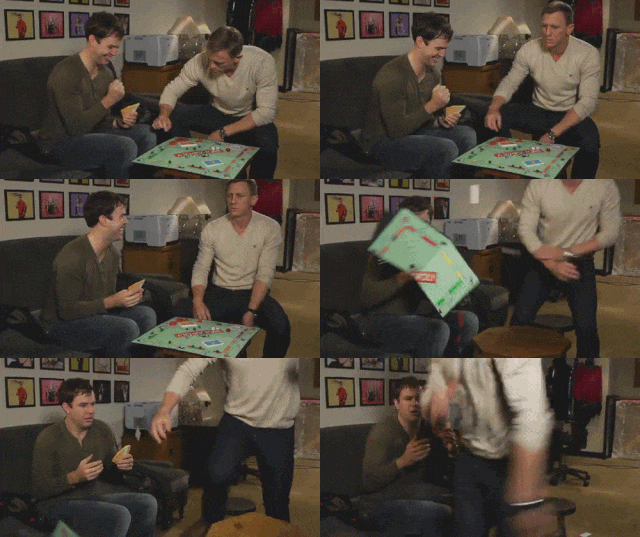
https://gph.is/2rwNMAA

According to Statista.com, the board game industry was worth over $8.5 Billion (US Dollars) in 2019, and is projected to reach $12 Billion by 2023, this means the Board Game Industry is currently experiencing a massive growth in market value. This is partly due to the Internetโ€™s ability to connect people with other people interested in the same things and makes accessing board games easier. Board games also allow people to socialise with friends and family in a fun, competitive manner (Sargeantson, E 2019). During my research, I came across these articles highlighting why board games are so popular, and I feel that our game is a good example of a game that lets you socialise with people whilst also having fun.

One set back I feel may hinder our game from functioning well is that the hidden identities may not remain hidden for long, making the game quite short and unfair for the alien team. However, whilst creating our game, I was particularly proud of the narrative we devised, as I feel it fits well with the mechanics of our game, as well as the characters and board design.

References

Board Game Geek, 2008, Ultimate Werewolf: Ultimate Edition, Board Game Geek, accessed 8th May 2020, https://boardgamegeek.com/boardgame/38159/ultimate-werewolf-ultimate-edition

Board Game Geek, 2012, Love Letter, Board Game Geek accessed 8th May 2020, https://boardgamegeek.com/boardgame/129622/love-letter

Board Game Geek, 2012, The Resistance: Avalon, Board Game Geek, accessed 8th May 2020, https://boardgamegeek.com/boardgame/128882/resistance-avalon

Board Game Geek, n/a, Clue, Board Game Geek, accessed 8th May 2020, https://boardgamegeek.com/boardgame/1294/clue

Board Game Geek, n/a, Monopoly, Board Game Geek, accessed 8th May 2020, https://boardgamegeek.com/boardgame/1406/monopoly

IMDb, n/a, Alien, IMDb, accessed 8th May 2020, https://www.imdb.com/title/tt0078748/

IMDb, n/a, Mars Attacks!, IMDb, accessed 8th May 2020, https://www.imdb.com/title/tt0116996/?ref_=nv_sr_srsg_0

Oโ€™Connell, L 2019, Global board games market value from 2017 to 2023, Statista, accessed 8th May 2020, https://www.statista.com/statistics/829285/global-board-games-market-value/

Sargeantson, E 2019, Why Board Games Are So Popular, my kind of meeple, accessed 8th May 2020, https://mykindofmeeple.com/why-are-board-games-popular/

COVID-19: My Game

The theme for my Digital Artefact is based around the current COVID-19 pandemic. Players work together to find the infected character and โ€œquarantineโ€ them to win, but the infected character will try to infect everyone if not stopped. Each player will have a character card such as the โ€œDoctorโ€ and โ€œDelivery Driverโ€ with special abilities, or a โ€œhealthy personโ€, as well as a limited amount of currency and an ability card.

During the first few weeks of BCM300, I playtested multiple different board and card games, and of the ones I played, I found my favourite to be โ€œUltimate Werewolf: Ultimate Editionโ€ (2008). I also enjoy โ€œCatanโ€ (1996) and โ€œMonopolyโ€ (1933), and for my game I plan on utilising mechanics and rules from all of these games. A game mechanic is a โ€œmethod invoked by agents, designed for interaction with the game stateโ€ (Sicart, M 2008). This means that a game mechanic is something put in place that allows players to interact with the game they play, and introduces interesting aspects and twists to the game.

Ultimate Werewolf is a social deduction game, which alternates between day and night modes, where players vote to โ€œkillโ€ other players in the hopes of surviving and winning. As I enjoyed the mystery and uncertainty whilst debating with friends, I plan on having each player get a character card that must be kept secret at all times, and players must vote and debate who they think is โ€œinfectedโ€. However, one issue I keep noticing is that once someone is voted to be โ€œlynchedโ€, they can no longer play as theyโ€™re out, which is a big complaint regarding Werewolf. Therefore, to counteract this and change it, I am introducing a mechanism similar to the โ€œJailโ€ in Monopoly, in that the voted person gets sent to โ€œQuarantineโ€ for a number of rounds before being released.

A few months ago, I was introduced to โ€œCatanโ€ (1996) by my partner, and a mechanic I enjoyed was the trading of resources and the creation of loyalty whilst playing. Therefore, I am introducing a currency system to the game, which can be used to buy loyalty or items off other players. I am also including abilities card such as โ€œToilet Paperโ€ and โ€œHand Sanitizerโ€.

There is a significant market for social-deduction games, one of the original deduction games, Mafia (1986) has had numerous variations to it, such as โ€œTown of Salemโ€, and many other deduction games exist such as โ€œLove Letterโ€ and โ€œBattlestar Galacticaโ€. Therefore, I believe there is a significant audience that may be interested in my game, and as the game is not complex and can involve large groups, it could be considered a party game, therefore gaining a second audience of players.

The game I am developing is designed to simulate the current situation we face as we try to find all the people with COVID-19, and prevent them from spreading the disease, presented in a light-hearted, round-based, social deduction game.

I have developed the above chart to visualise the process of creating, testing and finalising  my currently unnamed game, and I aim to stick to this schedule as closely as possible.

References

Board Game Geek 2008, Battlestar Galactica: The Board Game, accessed 17th April 2020, https://boardgamegeek.com/boardgame/37111/battlestar-galactica-board-game

Board Game Geek 2012, Love Letter, accessed 10th April 2020, https://boardgamegeek.com/boardgame/129622/love-letter

Board Game Geek 2017, Town of Salem: The Card Game, accessed 17th April 2020, https://boardgamegeek.com/boardgame/191432/town-salem-card-game

Board Game Geek 2008, Ultimate Werewolf: Ultimate Edition, Board Game Geek, accessed 16th April 2020, https://boardgamegeek.com/boardgame/38159/ultimate-werewolf-ultimate-edition

CATAN, n/a, CATAN, accessed 17th April 2020, https://www.catan.com/game/catan

GAMASUTRA, 2017, Indie Smash Hit Town of Salem Gets New Expansion: The Coven, accessed 17th April 2020, https://www.gamasutra.com/view/pressreleases/299329/Indie_Smash_Hit_Town_of_Salem_Gets_New_Expansion_The%0ACoven.php

Monopoly, n/a, Monopoly, accessed 17th April 2020, https://monopoly.hasbro.com/en-au

Sicart, M 2008, Defining Game Mechanics, Game Studies, accessed 17th April 2020, http://gamestudies.org/0802/articles/sicart

Does Uni Prevent Sport?

Starting University was an amazing experience for me, I found that I had enjoyable subjects, made a good group of friends early on, and had plenty of free time to socialise, relax and play sport. So I always found myself confused when people say stuff along the lines of:

  • โ€œUgh Iโ€™m so stressed, I have no time to complete everything!โ€

Or stuff like:

  • โ€œI havenโ€™t been to *insert sport here* in ages!โ€

There are many various factors why someone might not play/stop playing sport, therefore the question I aim to research is:

โ€œDoes University affect Studentsโ€™ ability to participate in leisure activities, specifically sport?โ€

Since the age of 4, I have been involved in some form of sport, whether it was Tennis, Surf Life Saving/Nippers, Swimming, Basketball or Touch Footy, both for fun and to stay healthy. Therefore, the idea of having to stop playing sport altogether isnโ€™t something Iโ€™d want to consider. As I live only a short drive from the University, I believe I have been fortunate to be able to fit sport into my schedule, since I donโ€™t have to deal with travelling long distances each day. However, there are many other reasons why University Students might not play sport, some potential factors could be:

  • Their classes schedule doesnโ€™t allow it/takes up too much time.
  • They have work commitments.
  • They have family commitments.
  • They moved to be closer to University and donโ€™t know how to get involved.
  • Or they just donโ€™t like sport!

On the 16th of March I began my research into my question, by tweeting this poll:

The responses I received from this initial poll indicate that playing sport places you in the minority, as 68.7% of those surveyed do not play sport. In โ€œYoung adults drop exercise with move to college or universityโ€, a sample size of 683 Canadian adolescents were surveyed from the ages of 12-15, twice a year, over 12 years, and found a 24% decrease in the amount of physical activity they participated in, which suggests that a large amount of people do indeed stop physical activity as they grow up, which I believe suggests that factors such as university do prevent participation in sport (McMaster University, 2011).

My initial sample of the #BCM212 community shows that only 38.7% have continued to play sport whilst studying at UOW, however, only 31 people voted out of the almost 230 students (The Big Spreadsheet) currently taking the subject, as well as the #BCM210 UOW Hong Kong Cohort. Therefore, as my research progresses, I expect to receive more answers, which will change the results I end with.

Brechot, Nรผesch and Franck (2017, p.4871) claim it is far more beneficial to play sport, as there is โ€œa positive correlation between physical inactivity and a wide variety of detrimental health outcomes such as obesity, hypertension, osteoporosis, osteoarthritis, diabetes mellitus, colon and breast cancer, depressionโ€. Similarly, โ€œthe most physically active people are at the lowest riskโ€, as โ€œthere is incontrovertible evidence that regular physical activity contributes to the primary and secondary prevention of several chronic diseases and is associated with a reduced risk of premature deathโ€ (Warburton, Nicol and Bredin, 2006).

The World Health Organisation also states that insufficient physical activity is a leading factor in deaths worldwide each year, and 1 in 4 adults are not active enough. The recommended amount of exercise for Adults aged 18-64 is a minimum of 150 minutes of moderate-intensity per week (World Health Organisation, 2018). The Department of Health Australia also states that a regular exercise routine is essential in maintaining wellbeing and preventing chronic disease and obesity (The Department of Health, 2019).

I believe my study is relevant, as UOW needs to consider and cater to all Studentsโ€™ best interests, and ensuring these students have the correct facilities they need for relieving stress and staying healthy whilst studying at UOW, whether that be through sport or other recreational activities, should be a top priority for the University. Therefore, by discovering whether University or other factors are preventing students from participating in sport, changes could be made to ensure students are able to participate in the recommended amount of exercise they need to stay healthy.

I plan to complete this over the course of the autumn session, by conducting surveys and posting on twitter, in the hopes of gaining as many responses as possible from the #BCM212 and #BCM210 cohorts, to achieve the most accurate results possible. However, interviewing people may prove to be difficult due to the current Covid-19 restrictions. One limitation to my study is that this only takes into account one subject of one degree at UOW, therefore, conducting a full University survey would offer the most realistic results.

Stay tuned to see how my project goes!

References:

Brechot, M Nรผesch, S Franck, E 2017, โ€˜Does sports activity improve health? Representative evidence using local density of sports facilities as an instrumentโ€™, Applied Economics, vol. 49, pp. 4871, viewed 27 March 2020, https://eds-a-ebscohost-com.ezproxy.uow.edu.au/eds/pdfviewer/pdfviewer?vid=2&sid=fa8b5bcd-20f6-468e-81ad-663e5800c05f%40sessionmgr4008

McMaster University 2011, โ€˜Young adults drop exercise with move to college or universityโ€™,  ScienceDaily, accessed 26th March 2020, www.sciencedaily.com/releases/2011/12/111215232728.htm

The Department of Health 2019, Australia’s Physical Activity and Sedentary Behaviour Guidelines and the Australian 24-Hour Movement Guidelines, viewed 28th March 2020 https://www1.health.gov.au/internet/main/publishing.nsf/content/health-pubhlth-strateg-phys-act-guidelines

Warburton, D Nicol, C & Bredin, S 2006, โ€˜Health benefits of physical activity: the evidenceโ€™, CMAJ, vol. 174, issue 6, accessed 28 March 2020 https://www.cmaj.ca/content/174/6/801.long

World Health Organization 2018, Physical Activity, viewed 26th March 2020, https://www.who.int/news-room/fact-sheets/detail/physical-activity

Let’s play Ultimate Werewolf

The first three tutorials of BCM300 thus far have involved โ€œPlaytestingโ€ a number of board games in groups. โ€œPlaytestingโ€ is playing games (in our case, board games) โ€œto offer feedback that enables the developer to test concepts and mechanics, make improvements, identify potential problems, and ultimately determine if a game is fun.โ€ For us, this meant playing games to discover what we enjoy or donโ€™t enjoy about certain games, to give us ideas of what we want to make for our individual game project.

Over the past 3 weeks, we played a number of different card, board and social deduction games, with games involving 4-13 people, as well as our Tutor, Richard, participating as a Moderator for one of the games. The games my group have tested so far include:

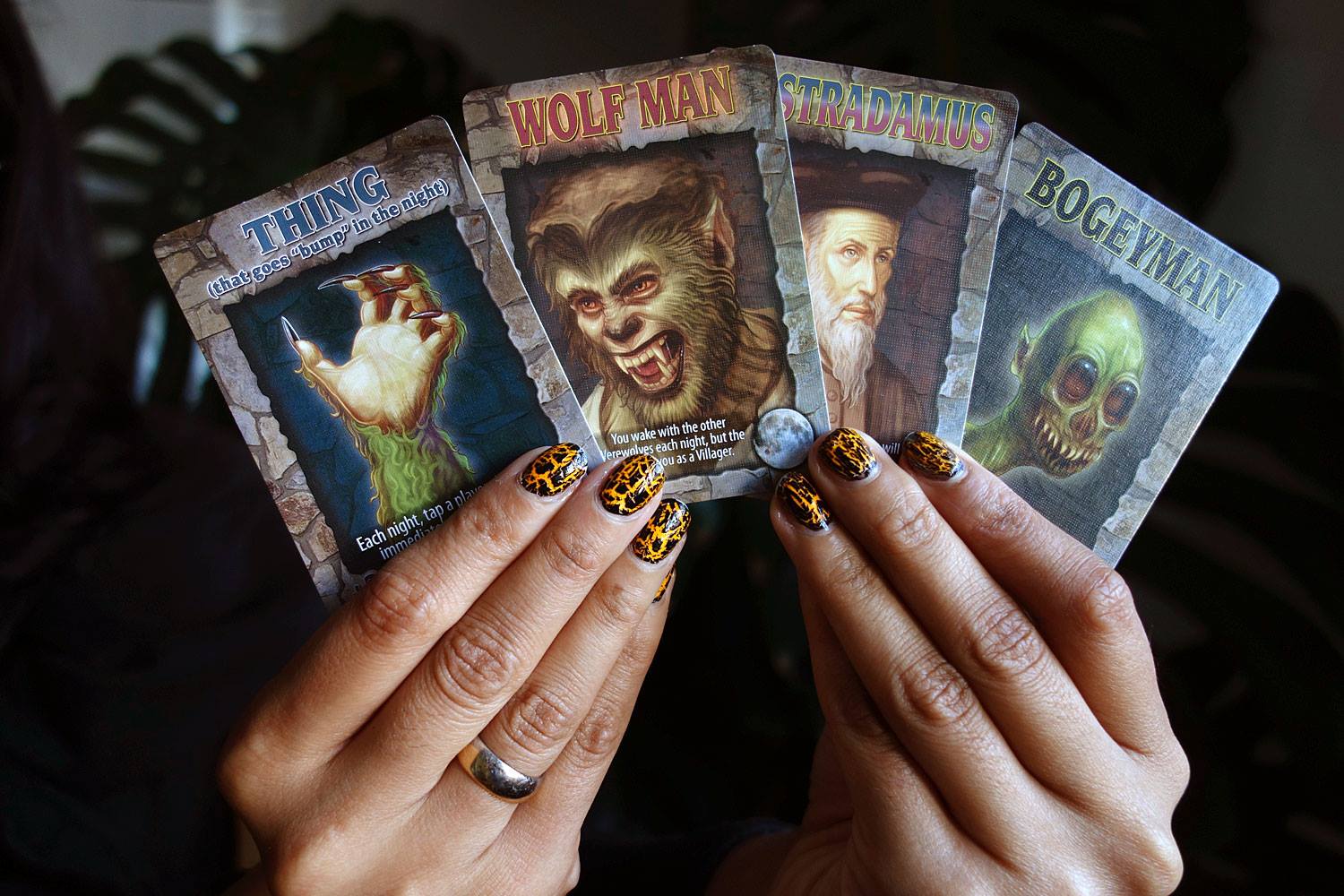
Each of these games brought something different to the table, with some fun and some not so fun aspects, and my favourite of these games is Ultimate Werewolf. Ultimate Werewolf is a party and card game designed by Ted Alspach and illustrated by Sanjana Baijnath, and was published in 2008 by Bรฉzier Games. The mechanics of the game involve hidden roles, player elimination via voting, role playing and betrayal, and all of these work incredibly well with the horror story and murder mystery setting created by the game.

Cover art

Synopsis: Your quiet little 16th century village has suddenly become infested with some very unfriendly werewolves…can you and the other villagers find them before they devour everyone?

The game has 77 cards, each with their own specific role in the game, with the most common being the Villager. Each person gets 1 card, which they must keep hidden until directed to reveal it. Each of these cards has a specific ability, except for the Villager cards.

The aim of the game is to survive, by killing off the Werewolves before they kill all the Villagers. Other Cards, such as the Hoodlum, have their own way of winning though, as their character trait lets them nominate two other players, and, if at the end of the game, those two are dead and the Hoodlum survives, he wins instead of anyone else.

How to play Ultimate Werewolf (normal edition)

Playing the game consists of day and night rounds, where during the day, all players must nominate and vote for someone to โ€˜killโ€™, in the hopes of that person being one of the werewolves. However, werewolves can also debate with who to kill, but must ensure they donโ€™t reveal their identity. During night time rounds, the werewolves are able to kill one person and certain other cards can do their thing.

I particularly enjoyed the backstory of each card, as well as having to use your imagination to fill in the large gaps. I also enjoyed the player debate, which makes up 90% of the game and helps drive it. Having all players debate was particularly interesting, as no one wanted to speak to soon for fear of being killed, and everyone was suspicious of everyone, as we didnโ€™t know each personโ€™s motives and identities.

1072059_10151861359592873_668942577_o.jpg
Some character cards for the game

Something thing I didnโ€™t enjoy during our playtesting, however, was the frantic nature of Throw Throw Burrito. The game itself was fun, I did like chasing, running and throwing of the Burrito. However, I didnโ€™t like the quickly throwing the cards away as soon as you get them. It felt rushed and made it less enjoyable.

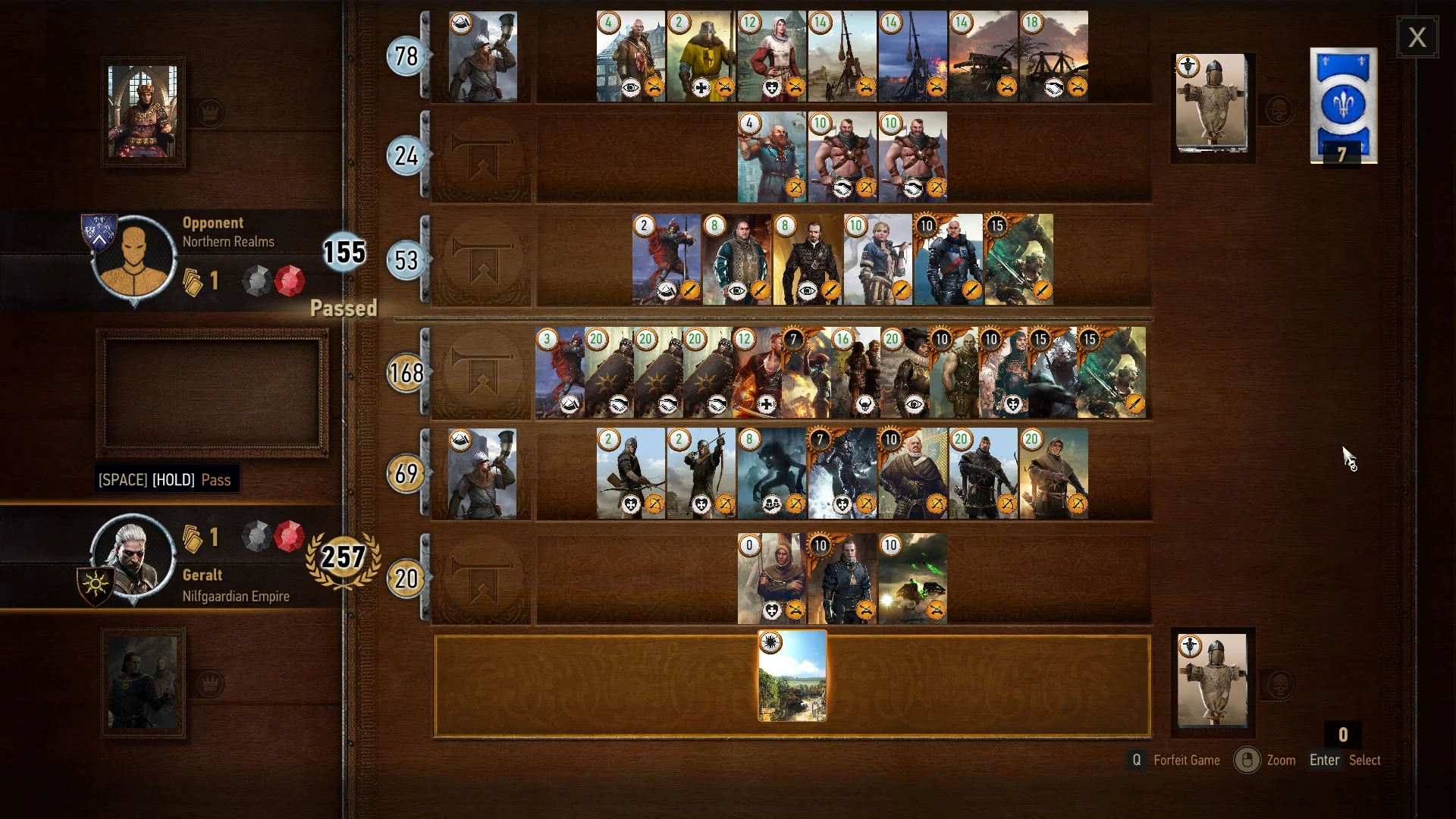
One thing I have taken away from these past few weeks is that Iโ€™d like to do some form of card game for my project, either involving social deduction (like Ultimate Werewolf and Love Letter), or a game similar to Gwent, where cards have points and the highest number wins, and certain cards have special abilities.

Image result for gwent

Sports at Uni

Sport has always played a large role in my life, as since the age of 4 or 5 I was enrolled in tennis lessons, then started playing in the Saturday Junior Competition run by Tennis Wollongong up until the age of 17. After that, I would infrequently join Dad and his friends and play Tennis with them occasionally, though I havenโ€™t played with them for a while.

At age 11, Mum and Dad also enrolled me in Nippers at North Wollongong Surf Life Saving Club, which I participated in until โ€˜graduatingโ€™ at age 14, and ever since Iโ€™ve been a Patrolling Member at North Wollongong Beach.

 In 2017, I joined a Basketball team some of my friends had already joined. I played with them for one season, before deciding to become a Basketball Referee for Basketball Illawarra at the Snakepit in 2018. I have been a Referee since then, and in December 2019, I joined a Menโ€™s team and have been playing since then, and we are currently 2nd on the ladder, with the Grand Final approaching soon.

Sport has played a large role in my life, and after having 5 months break from University, I have had plenty of spare time to relax, socialise and play sport, so now coming back to University, the question I want to research is:

โ€œHow does University affect Studentsโ€™ ability to participate in social activities, specifically sport?โ€

I aim to find out how often Students in BCM212 and BCM210 play sport, if at all, or if University takes up too much of their time. I am also seeking to find whether or not students believe the University offers a wide-enough range of sports and social activities. Another question I have for students who participate in sport is whether they play on-campus, or at an association not affiliated with the University.

Something else I would like to discover is if these students believe that playing sport has a positive or negative effect on their grades, or none at all.

Stay tuned to see what I discover!

North Gong Pt. VII

An exploration of how sporting organisations communicate with its members, with a focus on North Wollongong Surf Life Saving Club and the community around it.

Make sure to read North Gong Pt. VI before this!

Findings

After conducting my research, I have gained a large insight into North Wollongong Surf Life Saving Club and its social media usage. By interviewing Laura Booth, North Gong’s Social Media Manager, I have learnt about how the Club utilises social media to promote events, keep up to date with members, and advertise to potential sponsors. The Club is very active on social media, aiming to post at least once a week, and there is always some form of interaction with the posts, whether that is comments, shares or likes.

Another thing I’ve taken away from my research and interviews, is that both Facebook and Instagram have their merits and disadvantages. Instagram is better off as an image-sharing platform, whilst Facebook is better suited for sharing events and information, although both platforms can still do either of these things. According to Laura, there is always some form of engagement on both platforms, and this was reinforced by Kel and the other Interviewees, who claimed that they all engage through likes or comments.

Instagram and Facebook have however begun to introduce paid advertisements, making it harder for the Club to promote themselves, but the Surf Club community still manages to remain incredibly engaged with the accounts and each other.

North Gong is often packed with people

Garcia, Standlee, Bechkoff and Cui (2009, p. 52) state that “Technologically mediated communication is being incorporated into ever more aspects of life. The distinction between online and offline worlds is therefore becoming less useful as activities in these realms become increasingly merged in our society”. As technology becomes more prevalent, utilising social media as a free platform to communicate on is extremely useful, as North Gong can promote themselves to many people at the same time, and therefore engage with and attract more people to the Club, as well as keep up to date with current members.

My research into this topic has shown me how North Wollongong Surf Life Saving Club aims to engage and connect with its members on a personal level using social media to achieve this, and highly values the input of these members. Although I have only sampled a small group of people, I believe North Gong’s community are extremely satisfied with the social media output of the Club, as it offers something for all people across a range of platforms, including Instagram, Facebook and the website.

To further test these findings, a wider range of people would need to be interviewed and observed. An interesting continuation of this project could be to conduct the same research for multiple other surf clubs both in and out of the Wollongong area.

Thank you to all participants in this study, and to you for reading my Digital Story, I hope you learnt something along the way!

References:

Garcia, A. C.ย et al.ย (2009) โ€˜Ethnographic Approaches to the Internet and Computer-Mediated Communicationโ€™,ย Journal of Contemporary Ethnography, 38(1), pp. 52โ€“84. viewed 9th November 2019, https://journals-sagepub-com.ezproxy.uow.edu.au/doi/10.1177/0891241607310839#articleCitationDownloadContainer